

Key Takeaways
- Don’t let a blank work history stop you. Use a resume summary to pitch your potential and control the narrative before a recruiter even sees your experience section.
- Ditch the Objective: Focus on the value you offer the company, not what you want from them.
- The 4-Step Formula: Define your professional identity, highlight a key project, add a quantifiable result (e.g., 20% improvement), and connect it to the employer’s needs.
- Translate Your Life: Repurpose coursework, sports leadership, and volunteering as “Project Management,” “Operations,” or “Strategic Planning.”
- Add the Numbers: Always include a statistic. Numbers (GPAs, hours volunteered, social media growth) prove impact where job titles can’t.
Staring at a blank page when you have zero traditional work experience is intimidating. You know you have the drive, the smarts, and the academic foundation, but how do you prove it to a hiring manager? The truth is, you don’t need to write a standard resume summary packed with years of corporate milestones to get noticed.
When recruiters hire for entry-level roles, they aren’t looking for a 10-year work history—they are hiring for potential. In this guide, we’ll show you exactly how to write a beginner resume summary that translates your coursework, volunteer hours, and student leadership into undeniable professional value.
Why you need a summary when you have zero experience
Some candidates leave a blank space where their beginner resume summary should go, simply because they don’t know what to say to convey their value. But it’s a missed opportunity.
Without a summary, a hiring manager’s eyes go straight to your work experience section. If that section is thin (or empty), that’s where their attention stops. You’ve lost your shot before they even get to the good stuff—your skills, your coursework, your accomplishments, your potential.
A summary changes that equation entirely. It gives you control of the narrative. Instead of letting a recruiter draw their own conclusions from an empty work history, you step in first and say: here’s who I am, here’s what I’ve done, and here’s exactly why you should keep reading.
For entry-level candidates especially, a summary isn’t optional—it’s your most important real estate on the page. It’s the difference between a resume that gets skimmed and one that gets read.
Think of it this way: a seasoned professional with 15 years of experience can let their work history do the talking. You can’t—yet. So you talk first. Your summary is where you make the case that your unconventional experience adds up to something real, before a hiring manager decides it doesn’t.
The “no work experience” summary framework
Navigating the job market as a new grad or as a candidate with no work experience can feel daunting. What do you write when you haven’t worked a post-grad job or had relevant work history before?
The truth is, you’ve managed deadlines, led people, solved real problems, and delivered results—just not in a setting that always came with a pay check.
That volunteer shift where you single-handedly reorganised a donation drive? That’s logistics. The club exec role where you rallied 40 people toward a shared goal? That’s leadership. The group project you basically carried? That’s project management.
The goal of your resume summary isn’t to apologize for where you haven’t been. It’s to translate where you have been into language that hiring managers instantly recognize as valuable.
Use this four-part framework to do exactly that:
1. Who you are: Your field, degree, or professional identity (e.g., Marketing graduate, aspiring UX designer, bilingual communications student.)
2. What you’ve actually done: Your most relevant experience, drawn from school, clubs, volunteering, freelance gigs, or personal projects.
3. A number that proves it: A quantified result that shows impact.
4. What you’re bringing to them: A single line connecting your background to what this specific employer needs.
Translating untraditional experience into corporate value: beginner resume summary examples
You can transform almost all of your untraditional experience into an impressive beginner resume summary. It just takes a little creativity. Here are some examples to help spark some ideas and get started writing your resume.
Need to go back to basics? Learn how to write a resume summary.
Leveraging your education and capstone projects in your beginner summary
Your education experience is a rich bank of experience ideas. If you completed major projects, delivered presentations, or took independent learning to the next level, you can use the expereince to boost your resume summary.
“Creative content creator with experience in managing a personal blog, growing its readership to 1,000 monthly visitors. Developed strong writing and content creation proficiencies. Seeking to bring creativity and attention to detail to a marketing or content creation role.”
Why this works: This summary highlights a hobby blog, drawing parallels between professional content marketing roles and the skills developed through this personal project.
“Artistic graduate with experience in graphic design, having completed online courses in Adobe Photoshop and Illustrator. Designed promotional materials for school events, increasing attendance by 25%. Excited to bring artistic expertise to a design or marketing team.”
Why this works: Mentioning key graphic design tools like Adobe Photoshop and Illustrator fall under technical skills. Showing how these skills were applied in school events counts as nontraditional experience—but experience nonetheless.
“Recent graduate with honors in Mathematics, achieving top marks in advanced calculus and statistics courses. Participated in math competitions, placing in the top 10 regionally. Seeking to apply analytical and quantitative skills in a data analysis role.”
Why this works: Placing in the top 10 in competitions in math and statistics shows a high proficiency in math skills, but also infers soft skills like initiative, handling high-pressure environments, and flexibility.
“STEM enthusiast with a strong academic background in physics and chemistry. Completed a science fair project on renewable energy, earning first place at the district level. Seeking to apply analytical and research capabilities in a scientific or engineering role.”
Why this works: This summary details a high-quality capstone project that’s relevant to their field, linking their research and analysis experience to their desired role.
“Recent graduate with a 3.8 GPA and a passion for technology. Completed a capstone project in computer science, developing an app that improved classroom attendance tracking by 20%. Seeking to apply technical skills and problem-solving abilities in a software development role.”
Why this works: Using metrics to back up their impact, this beginner summary lays out how their capstone project helped classroom tracking. The proven show of skills makes up for a lack of paid work experience.
Highlighting extracurriculars, student leadership, and part-time work in your beginner summary
Your time outside the classroom is just as valuable. You pick up skills and experience that can show recruiters how you’ll bring value to an organization, as long as you frame it in a quantifiable way that spells out the connection.
“Team-oriented individual with leadership experience as captain of the high school soccer team. Led the team to two state championships and organized weekly training sessions. Seeking to leverage leadership and teamwork skills in a dynamic professional environment.”
Why this works: Soft skills are in-demand, and organized team sports can be a perfect example to include in your beginner summary to highlight these vital interpersonal skills.
“Active member of the debate club with strong public speaking and research proficiency. Led the team to win regional championships and mentored new members. Looking to utilize leadership and communication skills in a challenging work environment.”
Why this works: Debate club membership can be reframed as experience with key soft skills and hard skills like research. Growing these skills in an extracurricular environment can be shown as nontraditional experience.
“Passionate about fitness and health, with part-time experience as a gym assistant. Assisted with client schedules and maintained equipment, enhancing customer satisfaction survey results to a 4.7 star average rating. Looking to bring organizational talents and passion for health to a fitness-related role.”
Why this works: Part-time work is an excellent source of experience to draw from. Even if the job isn’t perfectly aligned, highlighting achievements like customer service scores and soft skills show off your work ethic in a way recruiters can understand.
Learn how to incorporate extracurricular activities into your resume and read: Top Extracurricular Activities to Add to Your Resume (Samples)
Using volunteer work, certifications, and hobbies
Your volunteer work can be a strong addition to your beginner summary—usually they’re similar to real jobs, minus the pay check. Meanwhile, certifications and hobbies show off skills you develop in your everyday life, making them more simple to translate into your summary.
“Enthusiastic volunteer with over 150 hours dedicated to community service at local food banks and shelters. Organized weekly meal distributions, aiding over 500 families. Passionate about social work and eager to contribute to a supportive team environment.”
Why this works: It uses high-volume metrics (150+ hours, 500 families) to prove tangible impact and a strong work ethic.
“Multilingual student fluent in English, Spanish, and French, with experience volunteering as a translator at community events. Assisted over 100 individuals in accessing services. Seeking to leverage language skills in a customer service or administrative role.”
Why this works: This summary highlights a rare, high-value technical skill (trilingualism) and provides immediate evidence of its practical application in service, making the link for recruiters.
“Community-focused graduate with a 3.9 GPA and extensive volunteer experience at local non-profits. Organized community clean-up events, improving local park conditions by 15%. Eager to bring organizational and community engagement talents to a professional setting.”
Why this works: t combines academic excellence (3.9 GPA) with a specific, quantifiable achievement (15% improvement) to show a results-oriented mindset.
“Certified in Basic First Aid and CPR, with hands-on experience from part-time babysitting jobs. Known for reliability and excellent communication with parents. Implemented schedules and provided educational activities for children, seeking to bring caregiving proficiency to a full-time position.”
Why this works: This beginner summary leads with essential certifications (First Aid/CPR) and translates casual experience into professional skills like scheduling and communication.
“Certified in HTML, CSS, and JavaScript through online courses. Developed a personal website showcasing photography projects, increasing online portfolio traffic by 40%. Seeking to apply web development skills in a tech-related role.”
Why this works: It demonstrates initiative through self-certification and proves competence by citing a 40% growth in digital traffic.
“Dedicated and disciplined athlete with experience in competitive swimming. Designed rigorous training schedules while maintaining a 3.8 GPA. Developed time management and resilience, aiming to apply these aptitudes in a professional setting.”
Why this works: This beginner summary frames competitive sports as a source of transferable soft skills like resilience and time management, backed by a strong GPA.
Entry-level resume summary examples
Here are more resume summary examples to help you write your own.
Beginner resume summary for the recent college grad
“Results-driven Business Administration graduate with hands-on experience leading a four-person capstone team through a full market analysis for a local small business. Strengthened communication and project coordination expertise as VP of the university’s Entrepreneurship Club, where membership grew by 40% over one academic year. Eager to bring strategic thinking and a collaborative work style to an entry-level operations or analyst role.”
“Community-focused Psychology graduate with 200+ volunteer hours supporting crisis intake at a campus mental health centre. Trained in active listening and conflict de-escalation, and recognized by supervisors for consistently maintaining calm under pressure with high-need clients. Looking to bring empathy, discretion, and strong interpersonal skills to a human resources or client-facing role.”
“Resourceful Communications graduate who independently grew a personal lifestyle blog to 3,500 monthly readers through consistent content strategy and organic SEO. Experienced in copywriting, editorial planning, and basic analytics, with a working knowledge of Canva, WordPress, and Google Analytics. Seeking an entry-level content or digital marketing role where creativity and data-informed thinking drive results.”
“Ambitious graduate with a Bachelor’s in Kinesiology, combining academic excellence with leadership as the captain of the university soccer team. Coordinated training schedules and team-building activities, leading to a 30% improvement in team performance. Passionate about health and fitness, aiming to start a career in sports management.”
Beginner resume summary for the high school student
“Dependable and customer-focused high school student with two years of part-time experience as a cashier at a busy retail store, processing an average of 150+ transactions and successfully upselling an average of 25 customers per shift. Recognized by management for punctuality and accuracy, with zero cash-handling errors over six months. Eager to bring a strong work ethic and proven customer service skills to a retail or hospitality role.”
“Organized and driven Grade 12 student with three years of experience as secretary of the student council, coordinating school-wide events attended by 500+ students and managing communications across a 12-person executive team. Developed strong administrative and public-facing skills through hands-on event planning and peer leadership. Looking to apply these proficiencies in an entry-level office or administrative support role.”
“Academically strong high school student with a 90% average and 100+ volunteer hours completed at a local animal shelter, including weekly care coordination for 30+ animals and support during adoption events. Commended by shelter staff for reliability, compassion, and attention to detail. Looking forward to bringing dedication and love of helping others to your organization to make a real impact on your customers.”
Beginner resume summary for the retail-to-corporate pivot
“People-first retail professional with four years of experience on a high-volume sales floor, including two years as a shift supervisor responsible for onboarding, scheduling, and performance coaching of a 15-person team. Reduced new hire turnover by 20% by redesigning the in-store orientation process from scratch. Now seeking to bring hands-on people management experience and a genuine passion for team development into an entry-level HR or people operations role.”
“Customer-obsessed retail associate with three years of front-line experience translating product knowledge into sales, consistently landing in the top 10% of the store for upselling and add-on conversions. Contributed to a visual merchandising overhaul that increased average transaction value by 18% over one quarter. Looking to channel deep consumer insight and a natural instinct for what drives purchasing decisions into an entry-level marketing or brand coordinator role.”
“Data-driven retail team lead with five years of experience managing inventory, analyzing weekly sales data, and coordinating logistics across a flagship location processing $2M+ in annual revenue. Identified a stock replenishment gap that, once flagged and resolved, cut out-of-stock incidents by 30%. Eager to bring a process-improvement mindset and comfort with data into a business operations or analyst role in a corporate environment.”
Find the keywords recruiters want to see
Now you know how to take your nontraditional experience to spin it into an effective summary. But you’re not done yet. A successful beginner summary needs to include keywords from the job description to get in front of a recruiter and land an interview invitation.
The easiest way to pick out the most critical keywords from a job listing is with a resume scanner.
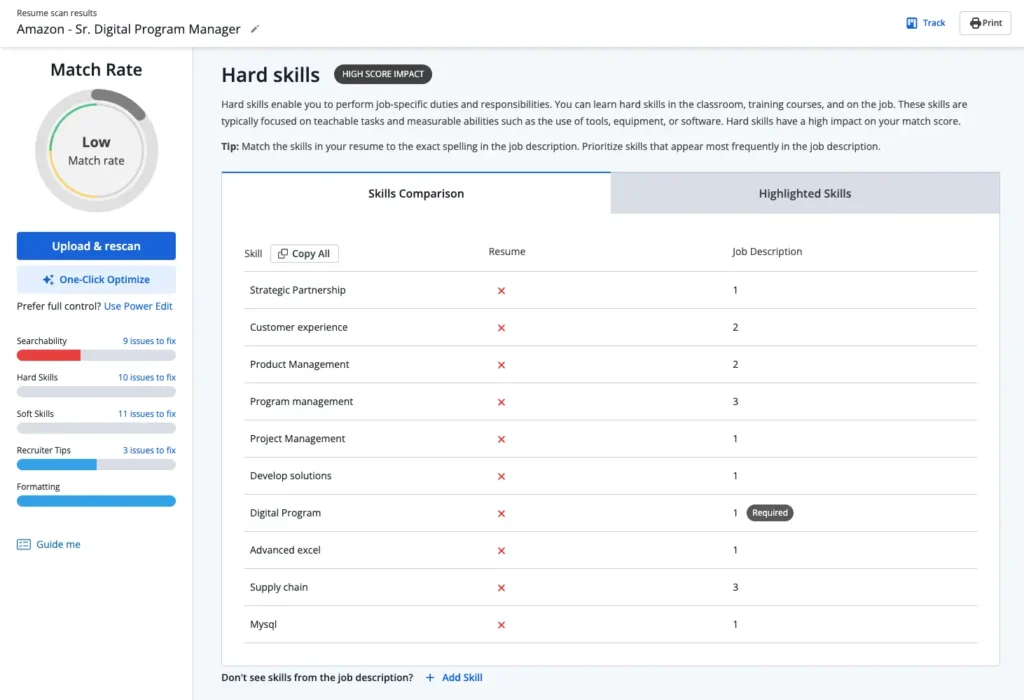
Resume scanner analyzes job descriptions alongside your resume and identifies keywords you’re missing. This information can help inform how you write your beginner summary.
The generated match report from your scan will give you a comprehensive blueprint for how to improve your resume for the applicant tracking system (ATS) and the recruiter filling the role.
Here’s an example of the report showing a comparison between what’s in the job posting and what’s missing from the resume. Using the generated list to integrate keywords into a beginner summary allows the most impactful skills to be right at the top of the resume.

Scan Your Resume
Generate your match report in seconds by scanning your resume against the job listing.
See your missing keywords
If you’re starting your resume from scratch, you can use the resume builder to help generate your resume summary. Input your education, certifications, volunteer work, and projects first. Then use the resume summary generator to write a draft beginner summary based on this information.
The final verdict: resume summary vs. objective for new grads
Resume summary and resume objective are often used interchangeably, but the two are very different. They serve different purposes and are used to convey different types of information.
Resume objective
A resume objective states your career goals and the type of position you are seeking. It is forward-looking and focuses on what you want to achieve in your career.
Primarily, it includes your career aspirations and what you aim to contribute to the employer.
For example, a resume objective could say something like:
Seeking a position as a Marketing Coordinator to utilize my skills in digital marketing and content creation in a dynamic, growth-oriented company.
Recruiters and career coaches argue against the resume objective because it’s more focused on the applicant, rather than the company you’re applying to.
Expert Insight
“I never like to see a resume objective on a resume. An employer is seeking an employee who will solve their problem, as opposed to prioritizing the wants and needs of the applicant.”
Kelli Hrivnak, Founder of the boutique recruitment firm, Knack Digital
Jazlyn Unbedacht, Resume Writer and LinkedIn Optimizer argues we should just get rid of resume objectives altogether. “I’m not sure why they ever were a thing to begin with. Harness expertise from other experiences in your life, like education, volunteer work, hobby pursuits, and more and use that to create a short summary of what you can bring to the table as an employee.”
Resume summary
A resume summary provides a brief overview of your professional background, highlighting your key achievements and skills. It is backward-looking, summarizing what you have already accomplished in your career.
The short paragraph includes your key qualifications, experience, and major achievements. A summary is designed to quickly give employers an idea of your expertise and the value you can bring to their organization.
Many entry-level applicants and those writing beginner summaries for their resumes tend to default to objectives. They worry they have nothing impressive to highlight in their summary.
But Kelli Hrivnak urges you to think outside the box. “For job seekers who don’t have relevant work experience, can you include other experience or skills acquired in your project work instead?”
For example, Kelli suggests writing something like:
“Google-certified Marketing graduate with 4 months of experience as an Audience Development intern at a nationally recognized publication firm. Grew audience engagement on Facebook by 30% by developing social strategy and initiatives.”
FAQs
What is a summary statement for a resume for a beginner?
A summary statement for a resume is a brief introduction that highlights your key skills, experiences, and what you aim to achieve in your career. For a beginner, this statement should focus on your education, any relevant skills, internships, volunteer work, and a clear career goal. It provides a snapshot of who you are and what you bring to the table, making it easier for hiring managers to quickly see your potential.
Example:
“Recent Marketing graduate with a strong foundation in social media management, content creation, and data analysis. Proven ability to increase engagement and brand visibility through innovative strategies, increasing social media followers by 30% in six months. Seeking to leverage skills and knowledge to contribute to a dynamic marketing team.”
How should I start my summary for my resume?
The beginning of your resume summary should immediately grab the reader’s attention. Start with a strong descriptor followed by your job title, relevant experience, or education. Mention a few key skills or achievements that align with the job you’re applying for.
Example:
“Highly motivated and results-oriented Computer Science graduate with hands-on experience in software development and database management. Skilled in Java, Python, and SQL, with a passion for developing efficient and scalable solutions. Developed a web application that improved process efficiency by 25%.”
What is a good resume profile summary?
A good resume profile summary is concise, focused, and tailored to the job description. It should clearly state your professional identity, highlight your key strengths and achievements, and convey your career aspirations. Use action words and quantify achievements whenever possible to make a stronger impact.
Example:
“Certified Project Manager with over 5 years of experience in leading cross-functional teams to deliver complex projects on time and within budget. Expert in Agile methodologies, risk management, and process optimization. Successfully managed a project portfolio worth $2 million, achieving a 95% on-time delivery rate.”
How do I introduce myself in a resume summary?
Introducing yourself in a resume summary involves providing a brief yet comprehensive overview of who you are professionally. Start with your current role or recent educational achievement, followed by your most relevant skills and a statement of your career goals.
Example:
“Enthusiastic and creative Graphic Designer with a Bachelor’s degree in Fine Arts and 2 years of experience in creating visually compelling digital and print media. Proficient in Adobe Creative Suite, with a keen eye for detail and a strong commitment to delivering high-quality work. Designed marketing materials that boosted client sales by 15%. Looking to contribute my design expertise to a forward-thinking company.”