

Career services has quietly evolved from a campus support function to now having the opportunity to be higher education’s most critical department for institutional survival. With graduate unemployment rising to 6.2% and mounting pressure to prove ROI, career centers are the department most capable of demonstrating the value of a college degree—yet most remain underutilized strategic assets.
Career services must transform to position your center as the strategic hub driving enrolment, retention, and graduate success. The institutions that recognize and empower their career centers today will thrive tomorrow; those that don’t risk slowly backsliding against an increasingly outcomes-focused education landscape.
Career centers need tools that provide clean and scientifically-backed data to prove the impact of their work. Investing in technology that supports center activities, tracks progress in multiple ways, and can lead to desired outcomes at the end of a higher education student journey can help you easily prove the value to any stakeholder.
You’ve already been doing this vital work for years. Now is the time to lead with clarity and demonstrate the immense value you bring, getting back to what you do best: working directly with students to help them achieve their dreams
The Challenge Ahead
How can colleges possibly improve graduate placement rates?
Apparently, not enough campus leaders have recognized that the solution to this problem is close at hand. The importance of career services is the key to improving higher education outcomes and helping colleges align their offerings with workforce needs.
With the seismic shifts in higher ed accountability, this is the wake-up call for career services professionals. The urgent concerns about the college-to-career pathway are an opportunity to bring the vital work of the Career Services Center to the attention of all stakeholders.
While the Career Center has been quietly doing good work with the student population, the landscape around it has changed, making its services an urgent priority for all colleges. Positioning career development services as central to the mission can bring your department the attention it deserves.
The Unseen Shift
External forces—policymakers, accreditors, governors, and others—are redefining the value of higher education around access and earnings outcomes. Stakeholders are looking for ROI in higher ed to justify the cost of a college degree, adding pressure to an already challenging picture for higher ed.
Funding Volatility
The past year has seen the federal government pause or cancel approximately $7-8 billion in research grants, resulting in hiring freezes, staff and program cuts, and budget tightening at the vast majority of higher education institutions. Restrictions and uncertainty about international college students have squeezed another revenue source for many. Volatility in state funding models adds to the uncertainties for colleges. The political winds and swift actions that have tossed colleges around are expected to continue for the near future.
K12 Focuses on Career Education
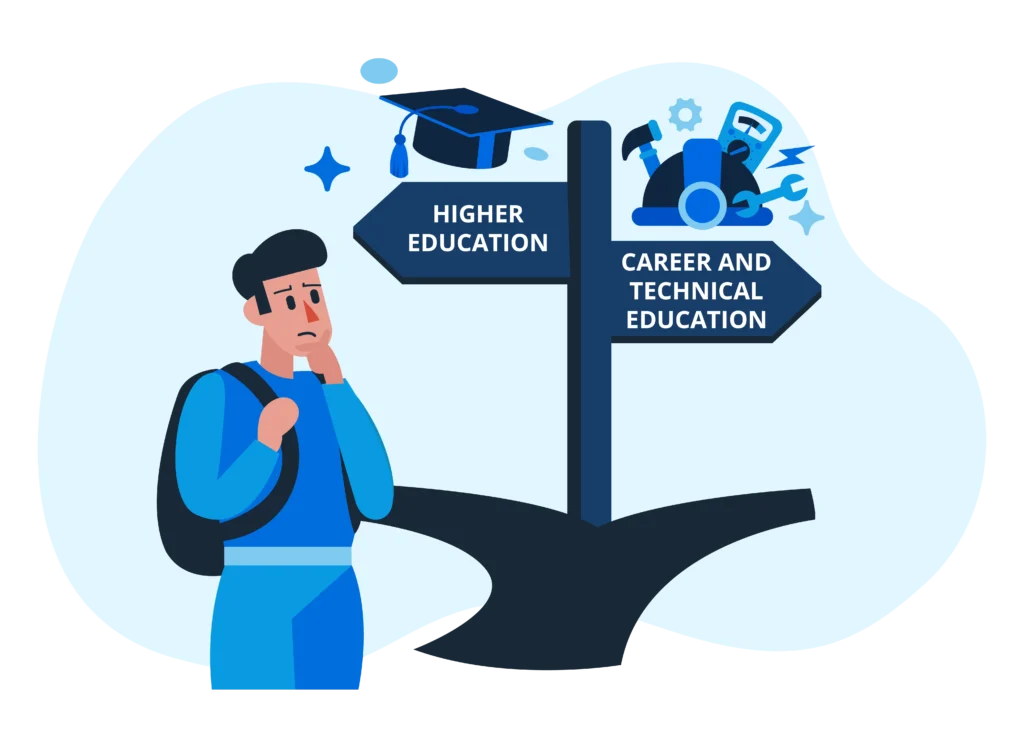
Along with the criticism of higher education, there is a significant shift in focus for K-12 education, with a greater emphasis on preparing students for direct workforce entry, with Career and Technical Education (CTE) being a top priority for schools. Job exploration and readiness are being embedded in coursework from elementary school on up. The message that college is not necessary for a good job puts more pressure on colleges to show their value in career readiness.
Labor Market Trends
The external shifts in the current job market will immediately challenge career center services. Unemployment rates for recent graduates are rising, while those with less education are experiencing a decline in unemployment. The unemployment rate for 20-24 year-olds with a bachelor’s degree increased from 5.2% in 2018-2019 to 6.2% between July 2023 and June 2025. In 2023 and 2024, the unemployment gap between young graduates and their less-educated peers was at its smallest margin in three decades.
The “Experience Paradox” is the new Norm
There is an “Expertise Upheaval,” where AI can now automate junior tasks, leading to a decline in entry-level job postings in fields such as technology and finance. At the same time, demand for senior-level talent in these fields remains at previous levels.
Post-pandemic hiring has also shifted, with knowledge economy positions that traditionally hire new grads becoming more risk-averse. This leads companies to seek experienced employees who will require less training and fewer openings for new college graduates.
Leverage the Value of Career Services
Professional development centers can counter these trends by providing students with experiences and credentials that potential employers seek in new hires. Expanding internship and mentorship programs is a strategy that can help direct students to relevant workplace experiences and assist in their job search. Students can create their own “experience” through projects, certifications, and upskilling, making them competitive despite the lack of traditional entry-level jobs.
What does this mean for Career Centers?
Now is the time for college career centers to step into the limelight and position themselves to help colleges meet the new demands for positive graduate employment statistics. Here are some strategies to gain the attention—and funding—that you deserve:
Become the Strategic Hub
The career center’s services can become central to student success and institutional relevance by providing more than just resume reviews. Elevate the department by using human capital to offer programs and counseling that yield results. Develop clearly defined goals and key progress indicators (KPIs) that align directly with institutional priorities like enrollment, retention, and workforce readiness. Conduct listening tours with deans, department heads, and student leaders to understand their specific needs and demonstrate why career services is important to achieving their goals. Present more public events to tout the essential services that can help colleges move the needle on graduate job placement rates.
Translate Impact into Language Leaders Notice
Learn to speak the language of ROI, outcomes, and equity. For instance, stating “We held 100 resume workshops” doesn’t show results. Instead, you could say, “Our workshops contributed to a 15% increase in internship placements for first-generation students, improving retention rates.” Create dashboards and one-pagers with key metrics that senior leaders can easily reference. Provide your supervisor with talking points 48 hours before important meetings so they can effectively advocate for the importance of career services. Showing effect of your work is the best way to help stakeholders understand why career services is important.

Build Internal Partnerships
Prioritize networking with academic units, enrollment, advancement, and other departments to build strong relationships of trust with students, faculty, and staff. Focus on academic integration by collaborating with faculty on curriculum development to embed career competencies and NACE skills directly into coursework. Help faculty, especially in liberal arts disciplines, articulate how their subjects connect to career outcomes—positioning career services as amplifying, not vocationalizing, academic work. Become more interwoven with different activities on campus so students have natural pathways into career counseling services.
Change How Career Coaches Handle Tasks with AI
Transition to a one-to-many approach for transactional tasks, allowing career advisors to provide nuanced, actionable advice that goes beyond traditional resume reviews and interview prep. Implement multiple delivery modes including self-service modules, online courses, peer advising, and chatbots to serve students at scale. For instance, one community college career professional successfully serves 11,000-14,000 students by focusing on curated self-service resources rather than unsustainable one-on-one appointments. This demonstrates why career services is an important department that can efficiently scale impact through strategic use of technology. Change the mindset to become strategic partners who help students stand out in a world where a degree alone is no longer a guaranteed ticket to a professional position. The ultimate goal is to move past repetitive tasks to focus on what matters most: providing personalized, high-impact career counseling.
Preparing for Tough Questions
With immense pressure to show student success, on and off-campus stakeholders will be asking new, data-driven questions about outcomes. University presidents, provosts, students, parents, alumni, and external agencies will be seeking metrics that demonstrate workforce alignment. Be prepared to disaggregate your data by major, identity, and year to identify equity gaps and demonstrate targeted interventions. Document themes from stakeholder conversations and reflect them back to show how career services addresses institutional priorities.
Career centers need tools that provide clean, customizable reports to prove their impact. Investing in technology that supports center activities and tracks progress in multiple ways can help you easily give statistics to meet the needs of any stakeholder.
You’ve been doing this vital work for years. Now is the time to lead with clarity and demonstrate the immense value you bring, getting back to what you do best: working directly with students to help them achieve their dreams.